Cart
0
You may also like
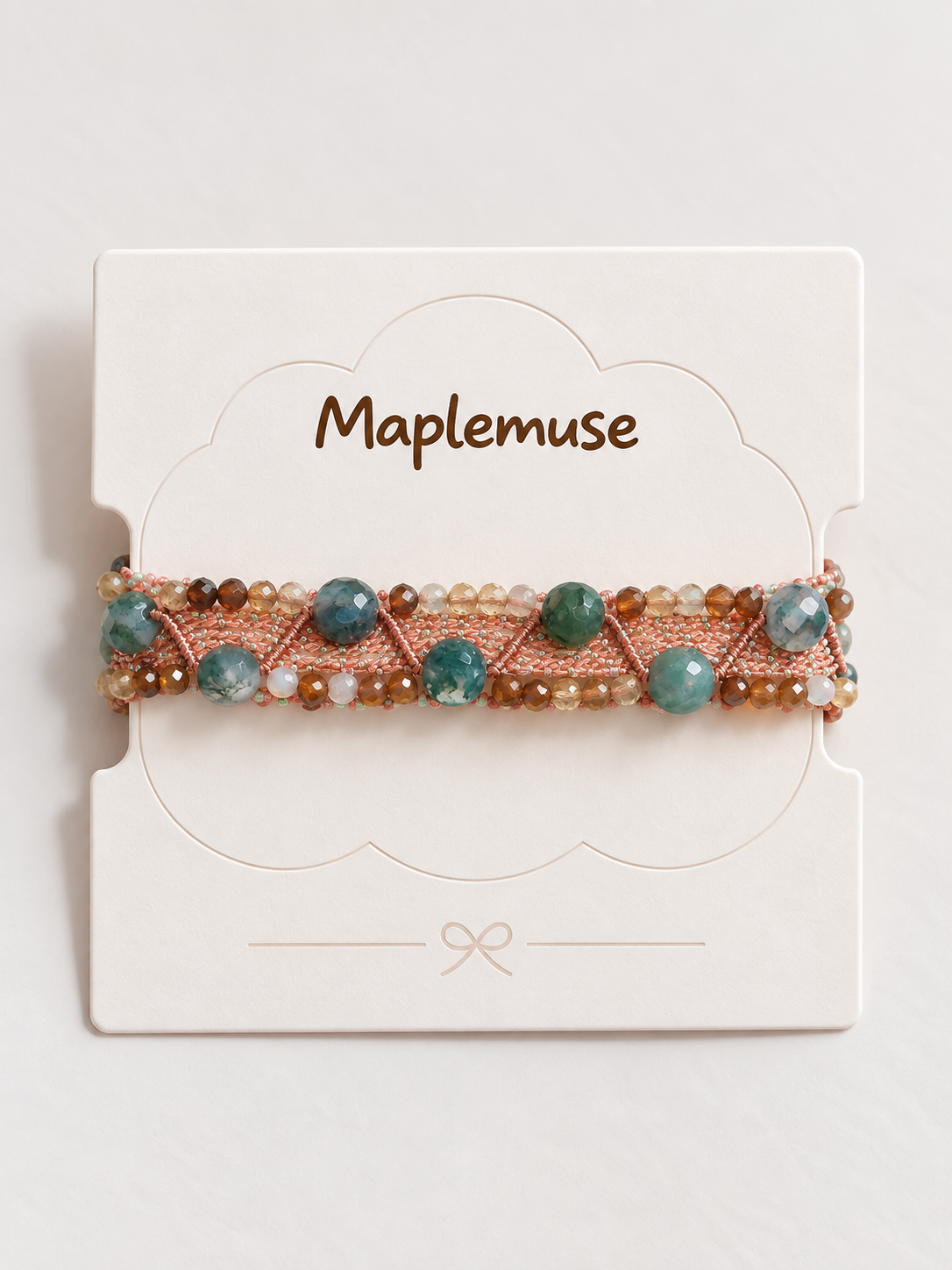
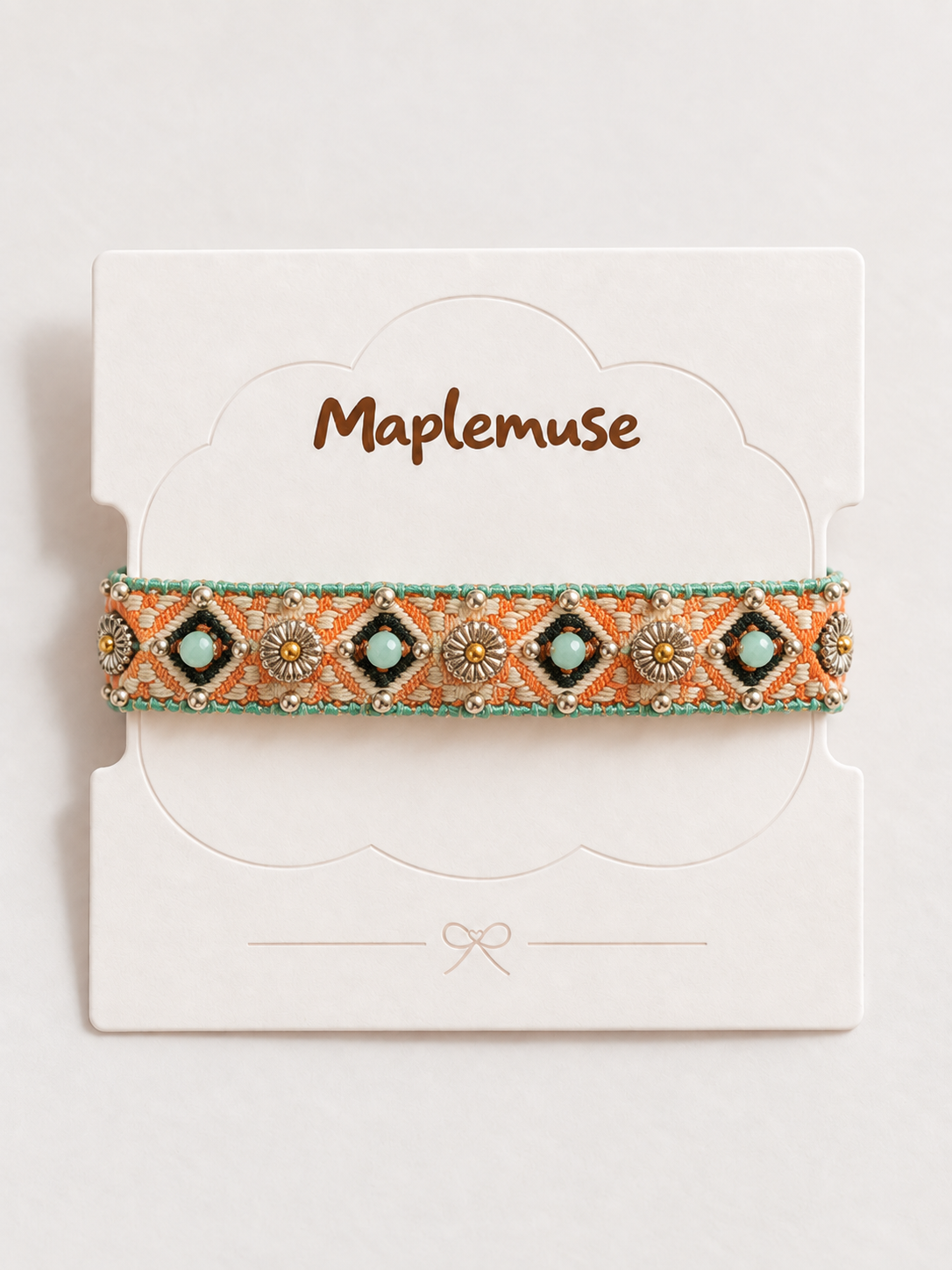
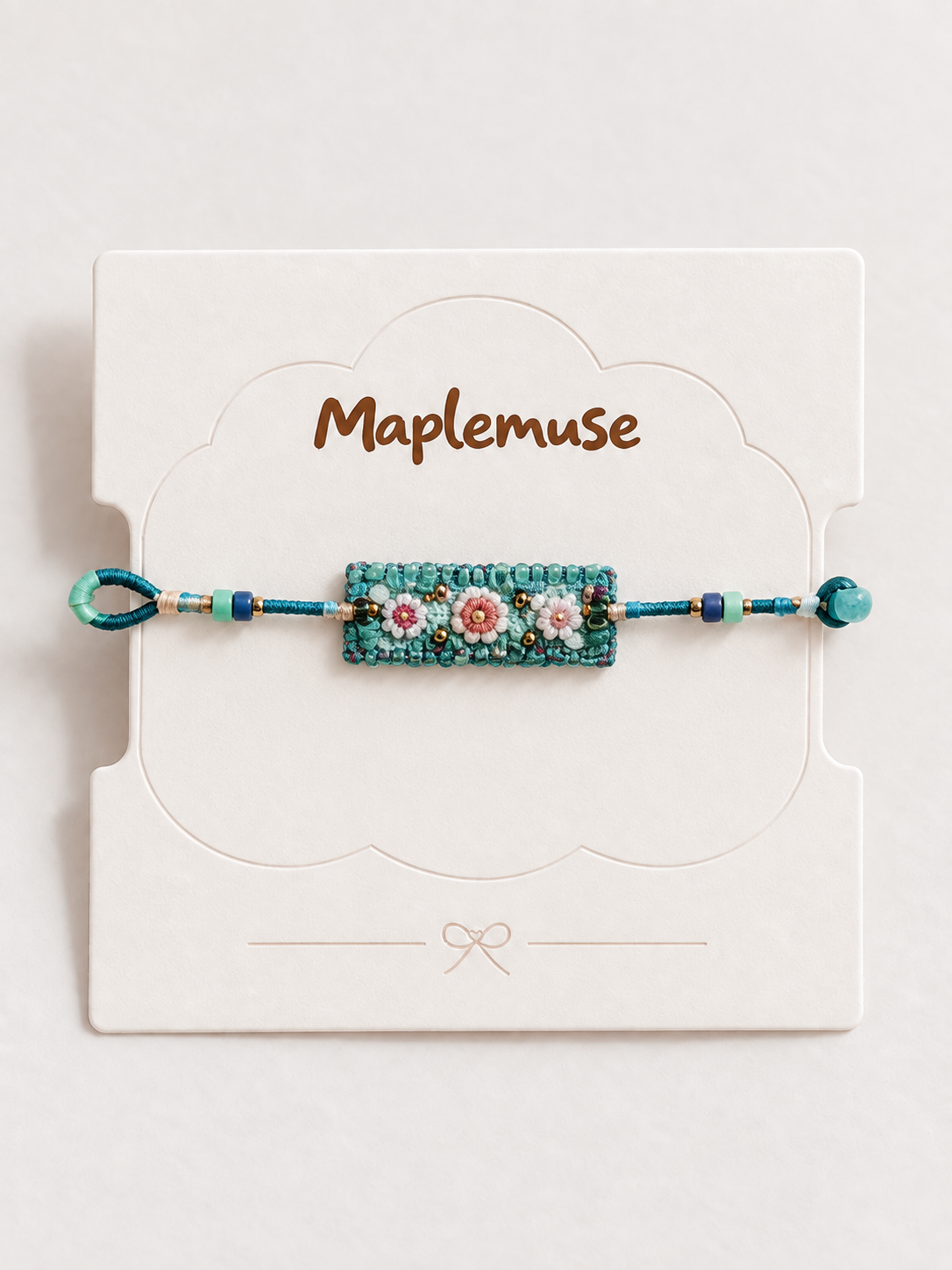
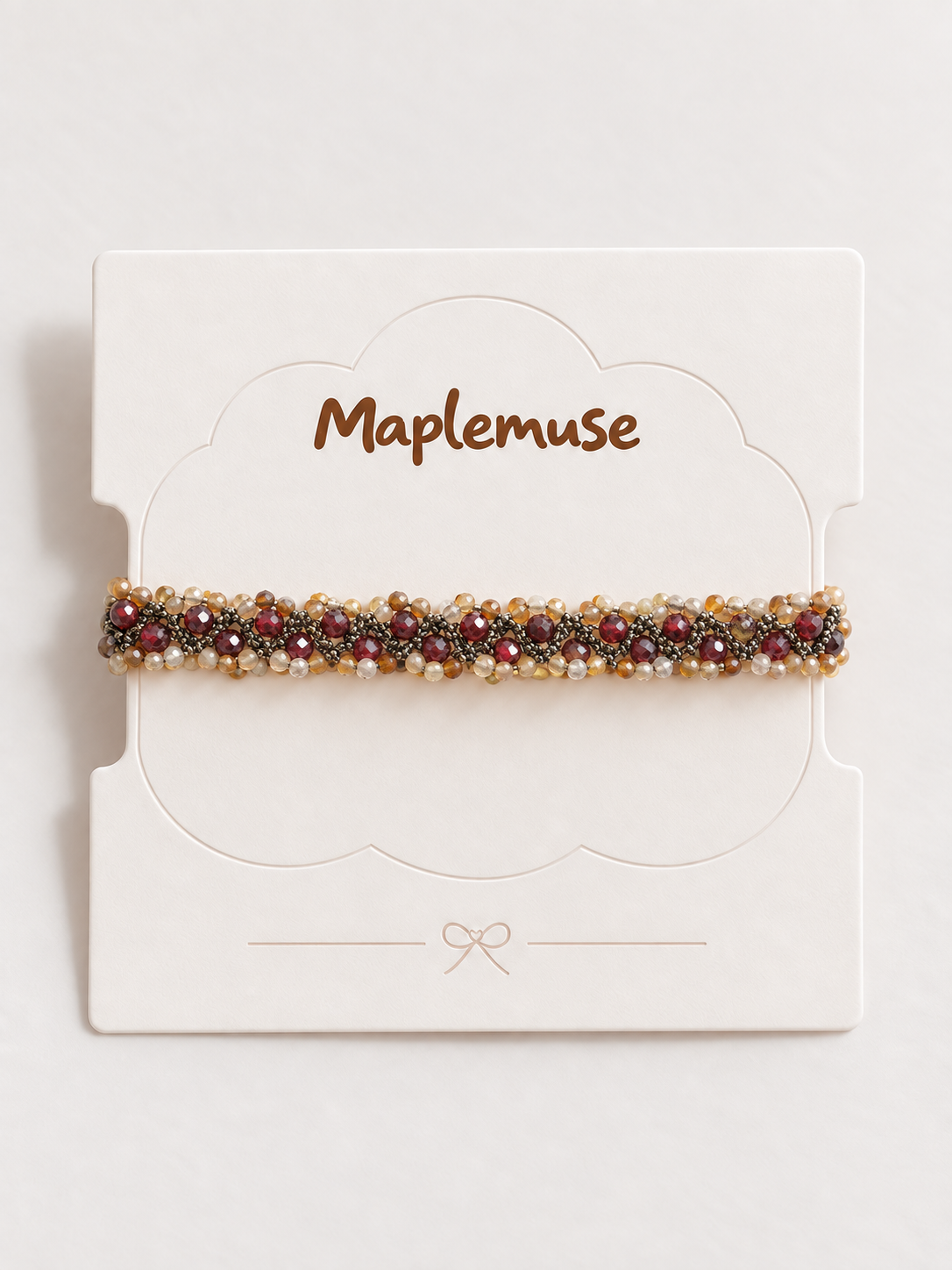


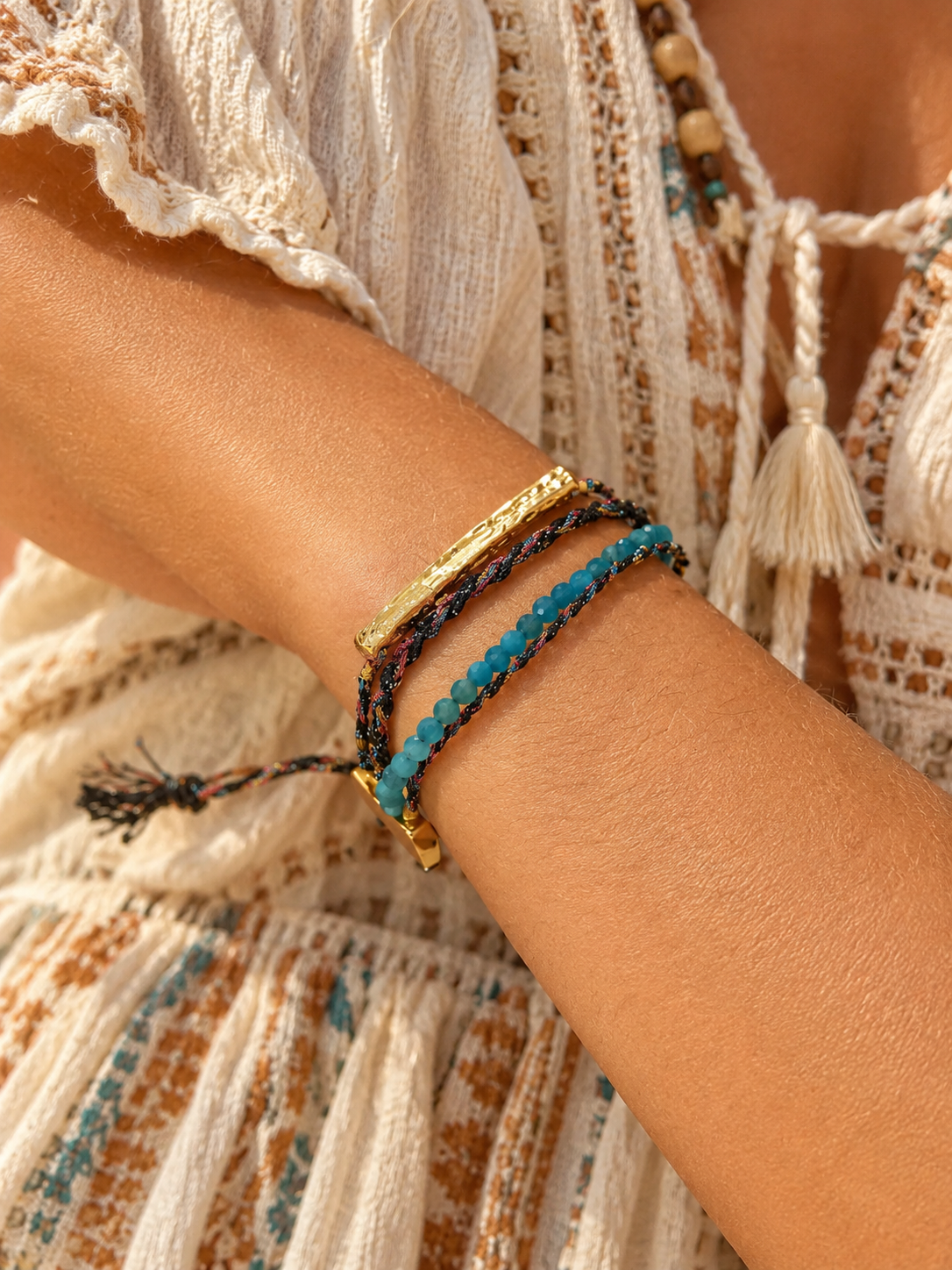
A closer look at pearls, embroidery, beads, woven structures, and the small material choices that give handcrafted jewelry its personality.


A bracelet made from embroidered fabric communicates something very different from a polished metal cuff. A freshwater pearl feels different from a perfectly uniform imitation bead. Velvet absorbs light while chain reflects it. Woven thread creates softness while structured findings provide stability.
These choices shape mood, comfort, movement, texture, and even the kind of clothing a piece naturally complements.
At Maplemuse, much of the design language begins here: not with decoration alone, but with the relationship between materials.
A successful mixed-material bracelet should not feel like several unrelated elements placed together. The materials should support one another through color, texture, proportion, or contrast.
Pearls have long been associated with elegance, but freshwater pearls can feel surprisingly modern when removed from traditional formal styling.
Their most important quality is often the one that makes them less uniform: natural variation. Shape, surface, tone, and luster may differ slightly from pearl to pearl.
That variation becomes especially beautiful in handcrafted jewelry because it echoes other irregular textures such as embroidery and woven thread.
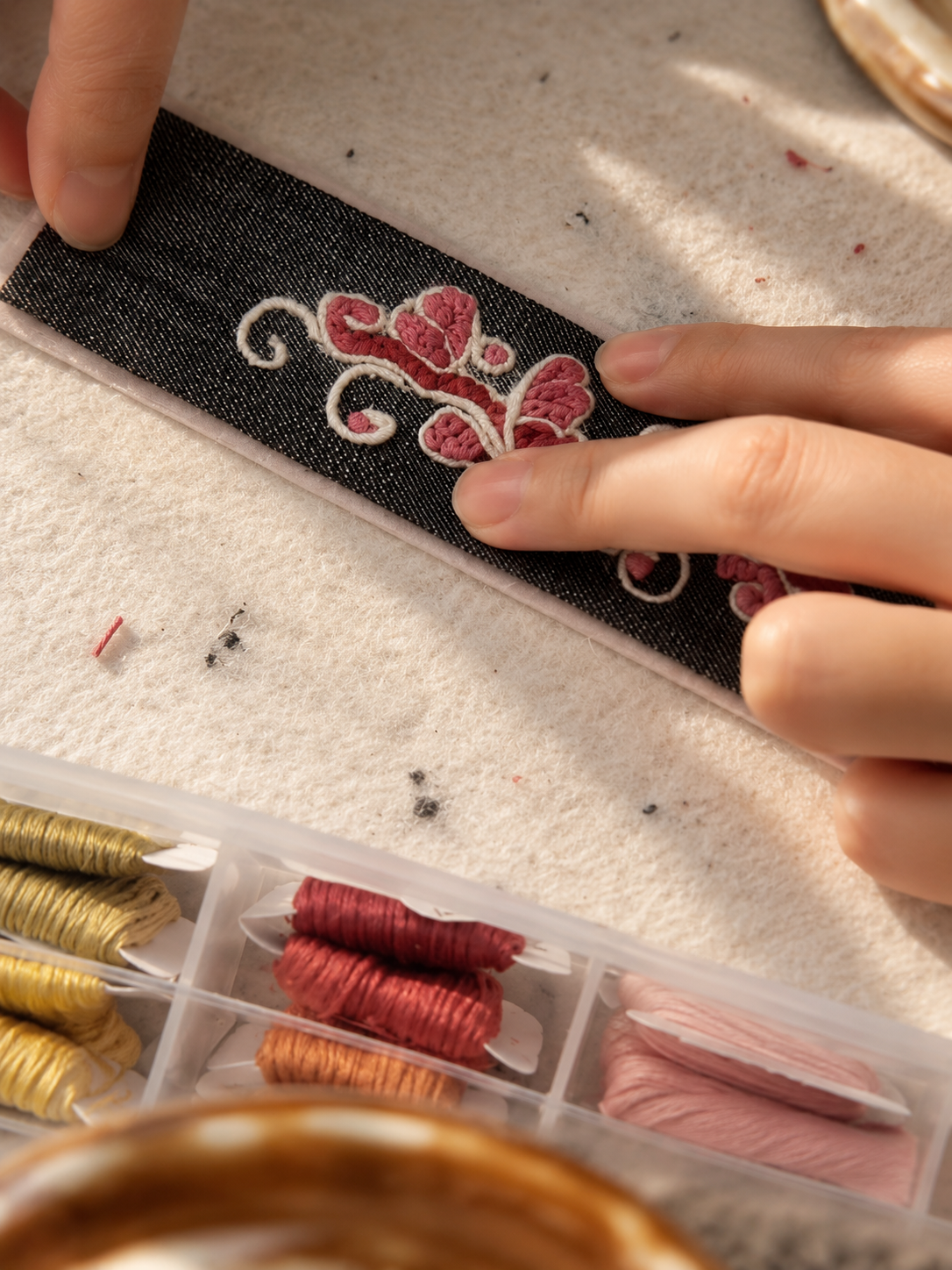
Embroidery changes the physical surface of a piece. Instead of merely placing color on fabric, it builds texture through thread.
This makes embroidered accessories especially responsive to light and movement. Raised stitches create tiny shadows. Multiple thread directions make the color appear more dimensional. Curves and floral shapes gain softness because they are constructed rather than printed.
Even when the same motif is repeated, handcrafted embroidery may contain small differences in stitch tension, placement, or alignment. These subtle variations create a feeling of individuality.
That does not mean craftsmanship should be careless. Strong handmade work still depends on proportion, secure construction, balanced placement, and a clear design intention.
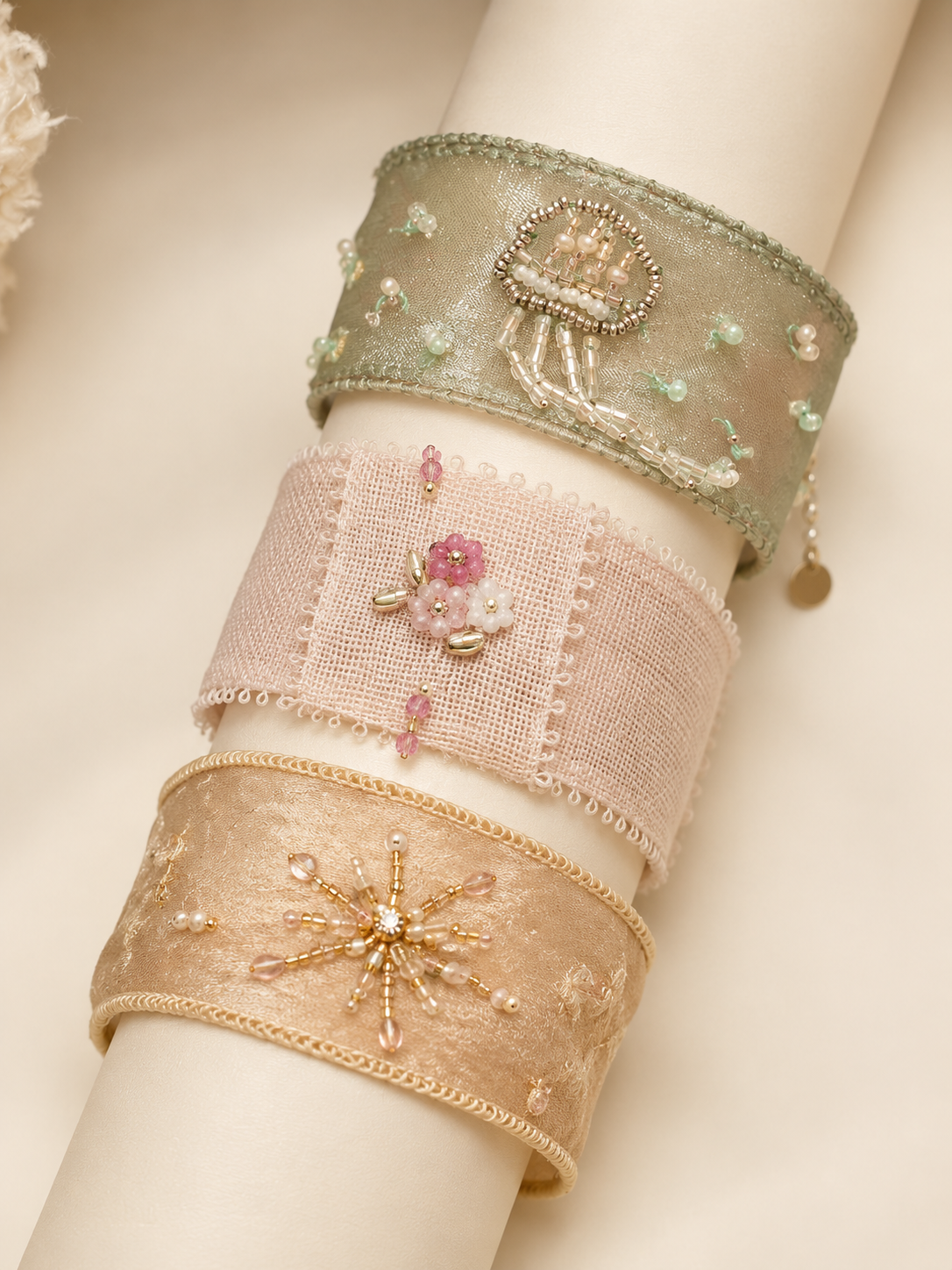
When jewelry includes thread, fabric, pearls, and beads, the design becomes less about one precious material and more about the relationship between many small details.
Beads may be tiny, but they strongly influence the rhythm of a design. Their spacing can make a bracelet feel delicate, dense, playful, structured, or relaxed.
Seed beads are especially useful in handmade accessories because they allow color to appear in small controlled amounts. A few blue-green beads may shift an otherwise neutral textile bracelet toward a coastal mood, while red or wine-toned beads can make it feel warmer and more dramatic.
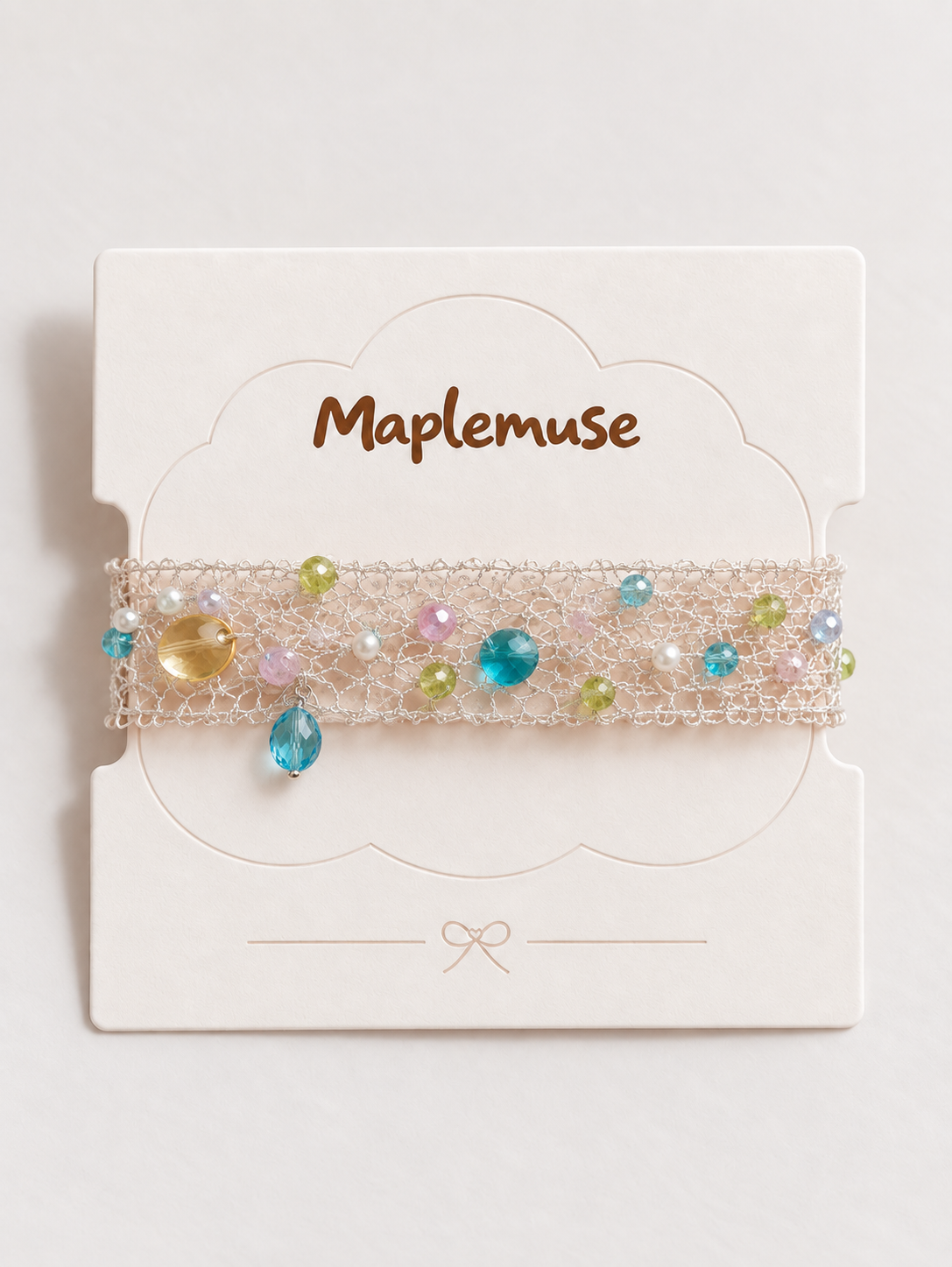
Woven and tatting-style techniques allow jewelry to hold shape while remaining visually light.
The structure is created through repeated tension and pattern rather than rigid material. This gives the piece flexibility while still allowing decorative shapes, loops, borders, and lace-like forms.
Woven jewelry is particularly useful for people who want detail without the weight of a larger metal bracelet.
Dense weaving can feel almost architectural, while looser woven sections appear airy and romantic. The thread color can also completely transform the mood of the same basic structure.
Textile jewelry is interesting because it borrows materials more commonly associated with garments and turns them into something smaller and more decorative.
Velvet creates depth because its surface changes depending on the direction of light. Mesh and tulle create transparency. Cotton-like fabric creates softness. These materials bring clothing-like qualities directly onto the wrist.
This also helps explain why textile jewelry often feels easier to combine with clothing. The materials already speak the same visual language.
Fabric absorbs light rather than reflecting it strongly. This gives color a softer appearance and can make rich tones such as burgundy, red, khaki, sage, and blue-green feel more subtle.
Adds softness, light, natural variation, and a refined visual point without sharp sparkle.
Adds visible craft, dimension, color, motif, and a sense of the human hand.
Add color rhythm, contrast, movement, and controlled decorative detail.
Adds lightweight structure, flexibility, pattern, and a lace-like quality.
A bracelet made from a single material can be beautiful, but mixed-material pieces often hold attention longer because the eye moves between surfaces.
A pearl may catch light while the textile remains matte. A metal chain may create structure while woven thread introduces softness. Embroidery can bring color, while beads provide rhythm.
This contrast makes a small accessory feel more complex without necessarily making it larger.
More materials do not automatically create a better design. If every component competes for attention, the piece can feel visually crowded.
Strong mixed-material design usually chooses one dominant texture and lets the other materials support it.
Appearance is only one part of jewelry design. A bracelet also needs to feel comfortable enough to wear.
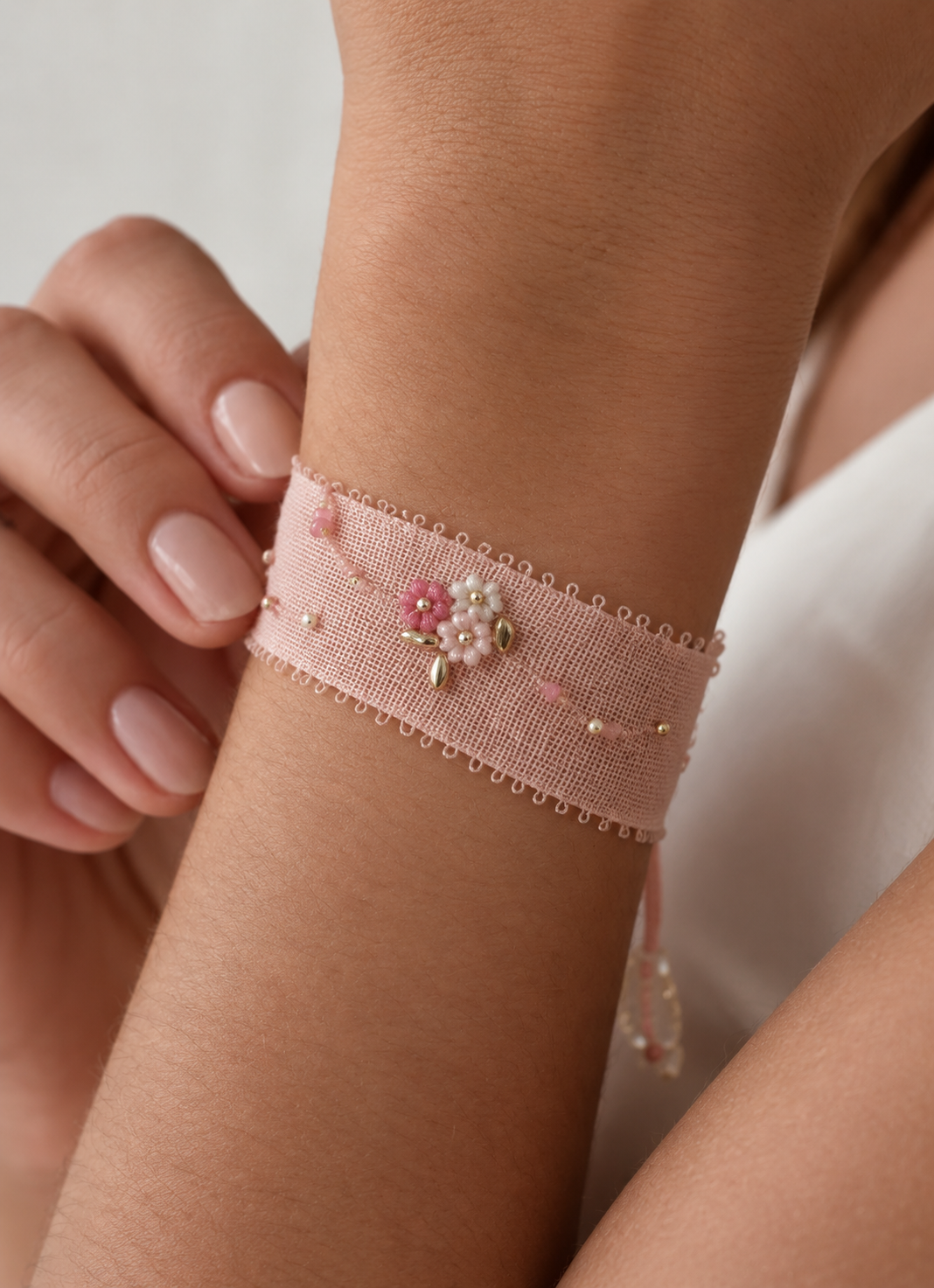
Textile and woven jewelry can feel softer and lighter than large metal pieces, but width, closures, bead placement, and thread tension all affect comfort.
A wide cuff-style bracelet may feel more noticeable on the wrist even if it is lightweight. A slim woven bracelet may nearly disappear during wear. A chain component may add structure but also change how the piece moves.
One of the most common questions about handcrafted jewelry is why one piece may not be absolutely identical to another.
The answer is usually found in the materials themselves. Thread moves. Fabric shifts. Pearls vary naturally. Beads may sit a fraction differently. Woven tension can change slightly.
These variations are part of the material language of the piece, as long as the overall structure, quality, and design remain consistent.
Good handmade design should still feel intentional. Materials should be secure, proportions should make sense, and the finished piece should reflect the intended design.
But expecting absolute machine-level sameness from natural pearls or hand-stitched details removes some of the very character that makes them appealing.
No. Freshwater pearls often contain natural differences in shape, surface, and luster. These characteristics are part of their organic appearance.
Yes. Embroidery and textile surfaces are more sensitive to friction, pulling, moisture, and snagging, so they should be treated more gently than solid metal jewelry.
Many woven bracelets are lightweight and comfortable for regular wear, but removing them before showering, swimming, sleeping, or exercise can help preserve their structure.
Lighting, camera settings, device screens, fabric texture, and dye variation can all affect how a shade appears. Matte textiles often change more visibly under different lighting than polished materials.
Yes. In fact, mixed-material pieces can make layering easier because they already contain texture. Pair them with one simpler bracelet rather than several equally detailed designs.
From freshwater pearls and embroidery to beads, woven thread, velvet, mesh, and delicate metal accents, Maplemuse explores how texture and material can make everyday accessories feel more personal.
Discover more handcrafted and artisan-inspired jewelry at maplemuse.store.
For product or material questions, contact service@maplemuse.store.